
In this article
Norm fundamentals
Why every OEM has their own variant
LV 124 , LV 148 and ISO 16750 define widely used frameworks for automotive electrical testing. But every vehicle manufacturer has their own electrical architecture — different voltage regulators, different alternator characteristics, different wiring harness topologies. A Porsche Taycan’s electrical environment is not the same as a VW Transporter’s, and a Tesla’s architecture is different from both.
Because of this, each OEM publishes their own company standard. The German OEM norms (VW 80000, BMW GS95024, MBN 10567 etc.) together form what the industry calls “LV 124” or “LV 148”. Some non-German OEMs adopt one of these norms (often VW 80000) with modifications — this is increasingly common among Asian OEMs. Others — like Tesla or PSA/Stellantis — have developed completely independent norms. If you supply an ECU, your customer defines which norm applies — and a testing lab needs to support all of them.
What changes between OEM variants
Voltage levels, ramp rates, hold times, pass/fail criteria, test sequences, and which tests are mandatory vs. optional. Some OEMs also add entirely new test types that go beyond what ISO 16750 defines. The test equipment must be flexible enough to handle all of them.
VW 80000 (VW80000) — Volkswagen Group
Covers VW, Škoda, SEAT, CUPRA, VW Commercial Vehicles
VW 80000 is the Volkswagen Group’s electrical testing norm — one of the core norms in the LV 124 family. It is arguably the most widely used OEM norm because the VW Group is the largest European automaker by volume. Tier 1 suppliers serving any VW Group brand will encounter this norm, and many non-German OEMs have adopted it as their own baseline.
VW 80000 defines VW-specific voltage profiles, timing constraints, and ECU response requirements (Funktionsklassen) that specify exactly how the ECU must behave during and after each test.
12V / 24V systems – Supported by RTStand
BMW GS95024 (BMWGS95024-2-1)— BMW Group
Covers BMW, MINI, Rolls-Royce
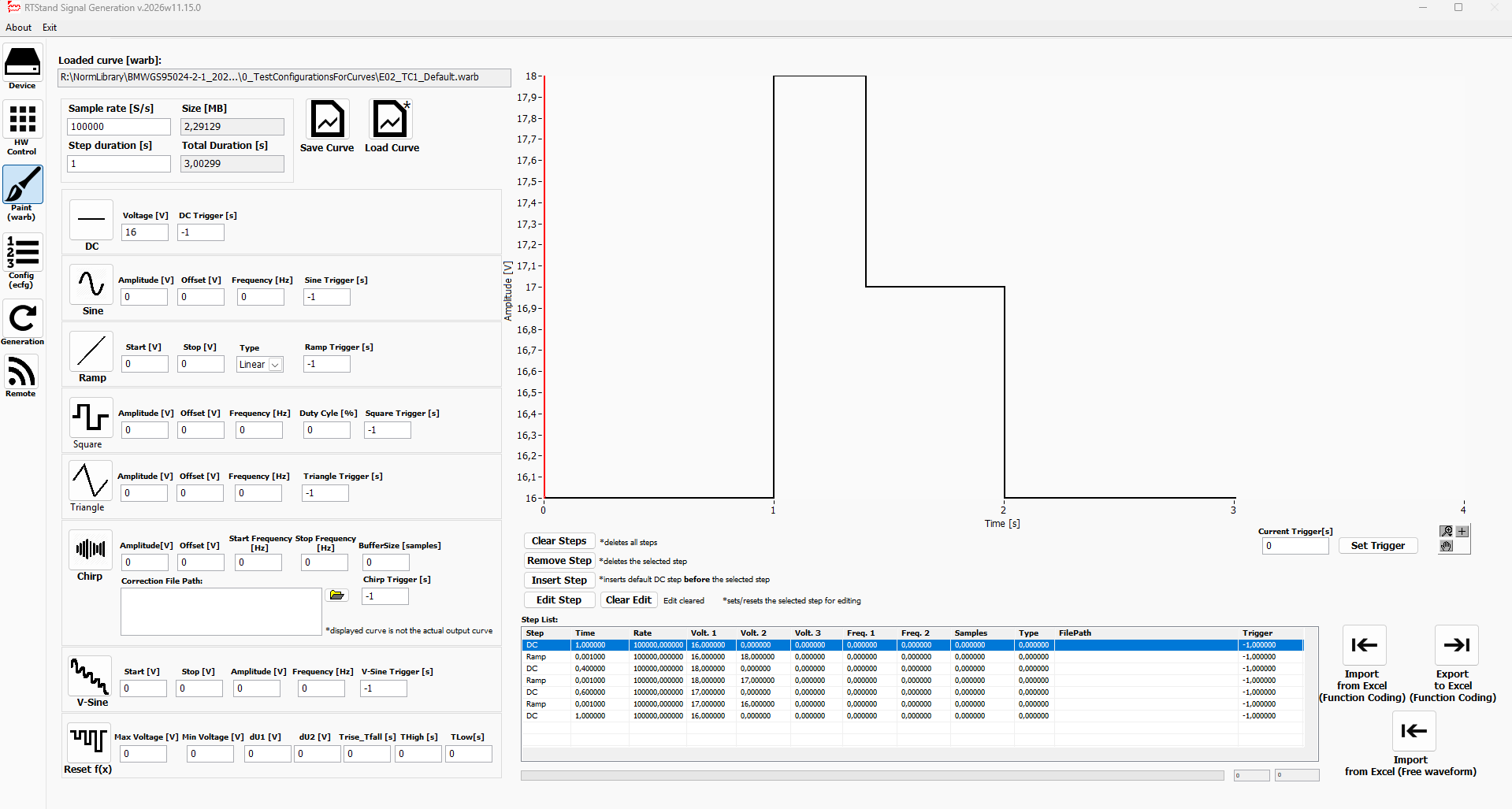
BMW GS95024 is BMW’s company standard for electrical testing. Part 2-1 covers the electrical load conditions. BMW’s variant is notable for its strict requirements on communication monitoring: the ECU must maintain CAN/LIN communication throughout many test profiles, and the test system must prove that it did.
BMW GS95024 defines its own severity classes and test sequences, particularly in the area of voltage transients and load dump profiles, that differ from what other OEMs in the LV 124 family require.
12V systems – Supported by RTStand
MBN 10567 / MBN 50569 — Mercedes-Benz
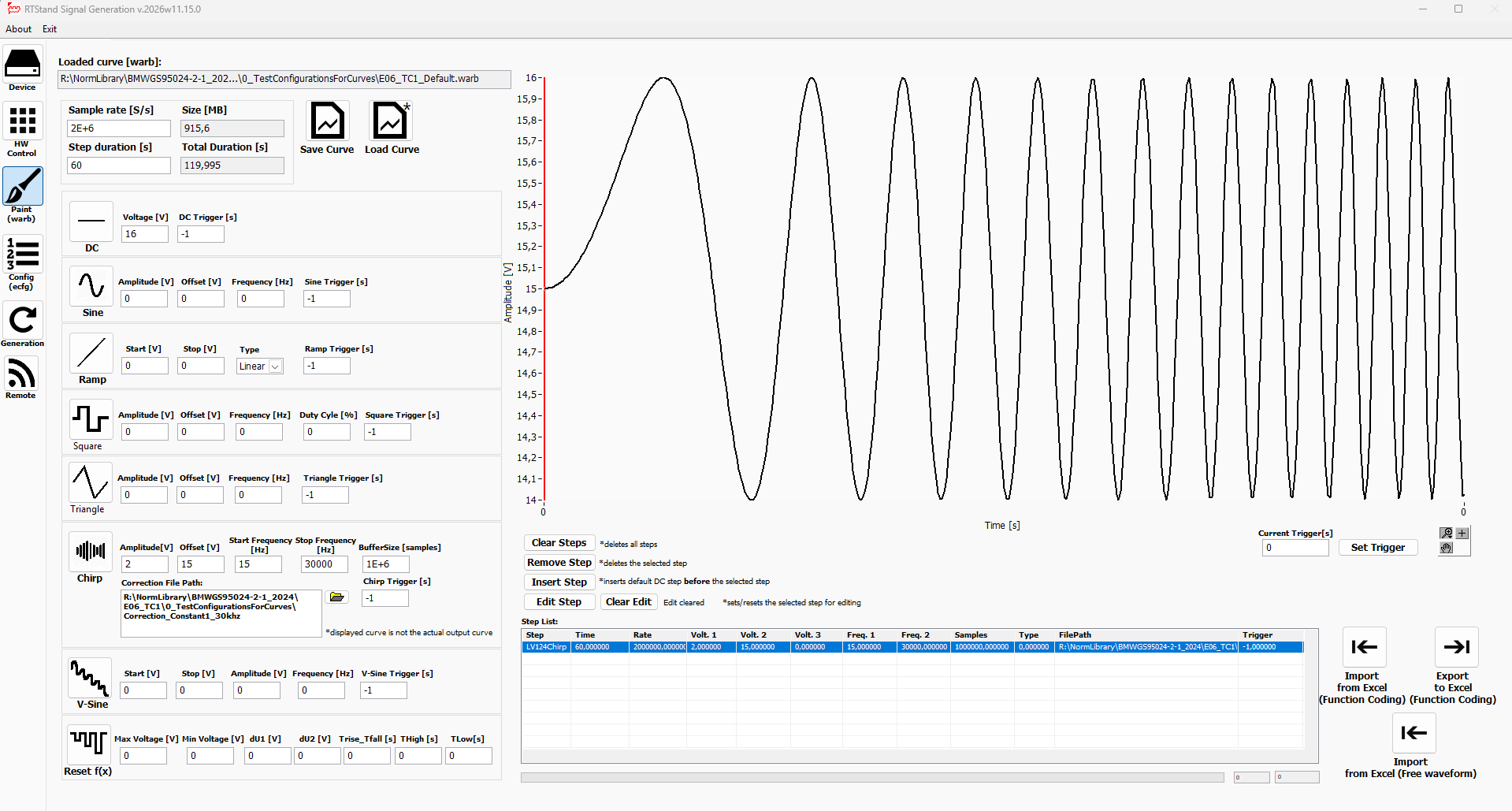
Mercedes-Benz uses MBN 10567, part of the LV 124 family, with Mercedes-specific test profiles and pass/fail definitions. MBN 50569 extends coverage to 16V systems.
MBN variants are known for their detailed requirements around ECU restart behaviour after voltage drops — the ECU must not only survive the disturbance but must recover to full functionality within a precisely defined time window.
12V / 16V systems – Supported by RTStand
Audi LAH — Audi AG
Norm IDs: AUDILAH4N0419091, AUDILAH895941, AudiLAH89A947B
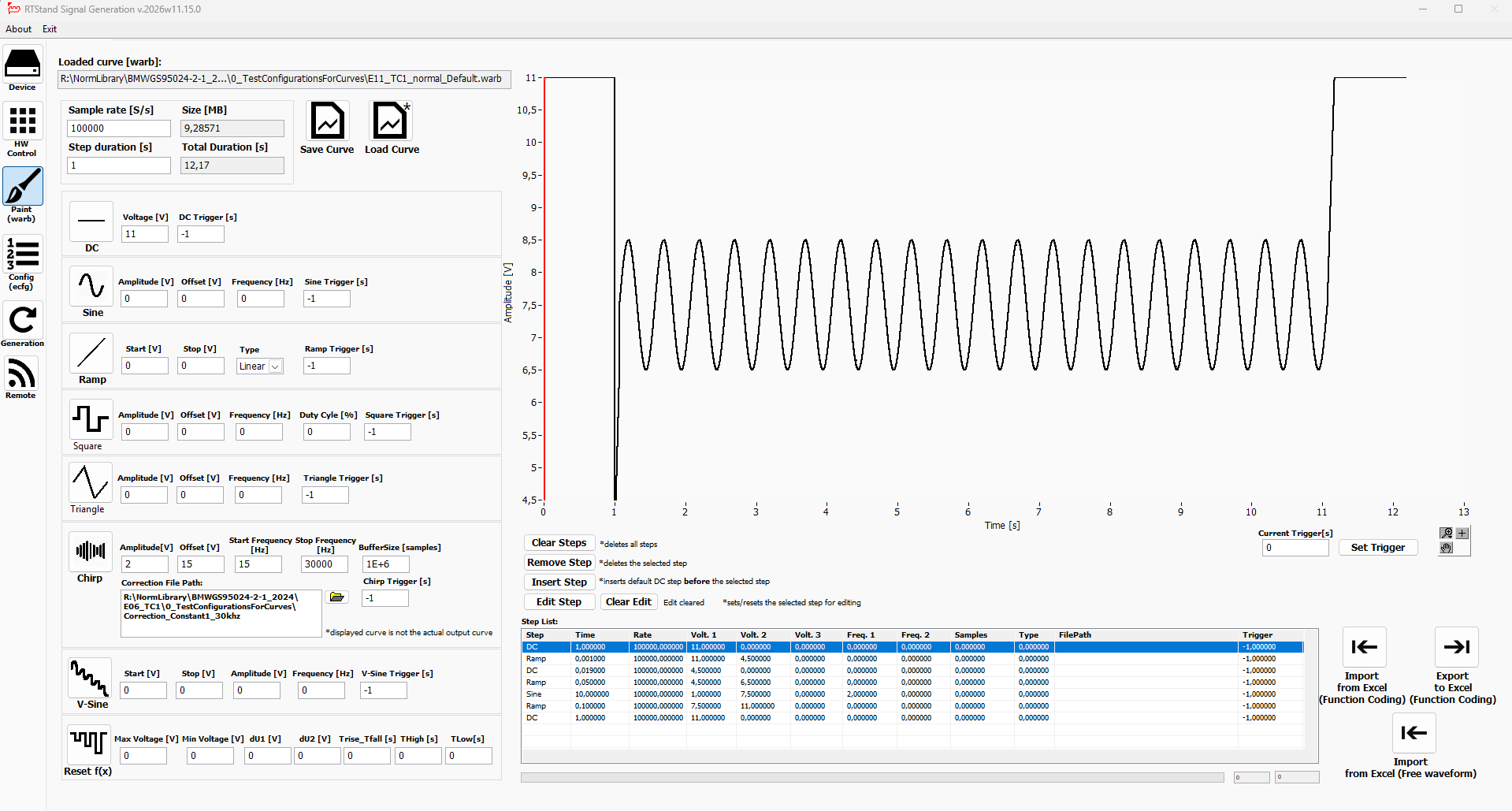
Although Audi is part of the Volkswagen Group, it maintains its own electrical testing standards — the Audi LAH (Lastenheft Automobil-Hardware). Audi LAH is part of the LV 124 family and shares many parameters with VW 80000, but adds Audi-specific requirements, particularly around premium vehicle architectures and higher-power ECUs.
Suppliers who already test against VW 80000 will find Audi LAH familiar, but cannot assume identical parameters — the delta between the two must be tested explicitly.
12V system – Supported by RTStand
Tesla, GM, Lucid, Zoox, PSA, JLR, and more
The norm landscape extends well beyond the traditional German OEMs. The approaches vary widely — some OEMs have developed completely independent norms, while others have adopted specific German OEM norms (often VW 80000) with their own modifications:
OEMs with their own standalone norms
Tesla (TS-0000425-05) — maintains a completely independent electrical testing specification covering 16V, 24V, and 48V systems. Not part of the LV 124 family or based on ISO 16750 — it is a standalone norm driven by Tesla’s unique architecture.
GM (GMW 3172) – the electrical testing section includes voltage supply tests, transient immunity, and ESD — similar in structure to LV 124 but with GM-specific parameters and severity levels.
Lucid (Lucid EEDRCS) — similar to Tesla, Lucid defines its own complete component validation requirements, independently of traditional standards.
Zoox (Zoox ESPS) — Amazon’s autonomous vehicle subsidiary has its own electrical testing specification, including a separate 13V variant.
PSA / Stellantis (PSAB217110) — the Stellantis group (Peugeot, Citroën, Opel, Fiat, etc.) uses its own norm family. Also FCA CS00054 for the former Fiat Chrysler brands.
Jaguar Land Rover (JLR EMCCS) — maintains an independent specification with its own test numbering system.
McLaren (McLaren MSL03040004) — the supercar manufacturer has its own component validation standard.
Ducati (DMH 3403001) — motorcycle-specific electrical testing with its own test profiles.
All and more supported in RTStand
Asian OEMs — often LV124-based
A growing number of Asian OEMs have adopted specific German OEM norms — frequently VW 80000 — as their baseline, with modifications. This is a significant shift from the assumption that non-German OEMs default to ISO 16750.
ChangAn (VS0034L10002) — the Chinese automaker has developed an extensive norm with hundreds of transient immunity test cases, structured similarly to the German OEM norms.
QJGAC / GAC (QJGAC152028) — Guangzhou Automobile Group has its own specification with LV 124-style test numbering.
QLiA (QLiA 3800001) — independent specification with its own test designations (QL51 through QL521).
JAC (QJQ36342) — JAC Motors uses its own standard for 12V systems.
Renault Nissan (RNDSC00517) — the Renault-Nissan alliance uses its own specification with EQIC/EQTE test designations, distinct from both LV 124 and ISO 16750.
12V / 24V systems – All supported by RTStand
Commercial vehicles and agricultural machinery — 24V
Truck, bus, and off-highway OEMs
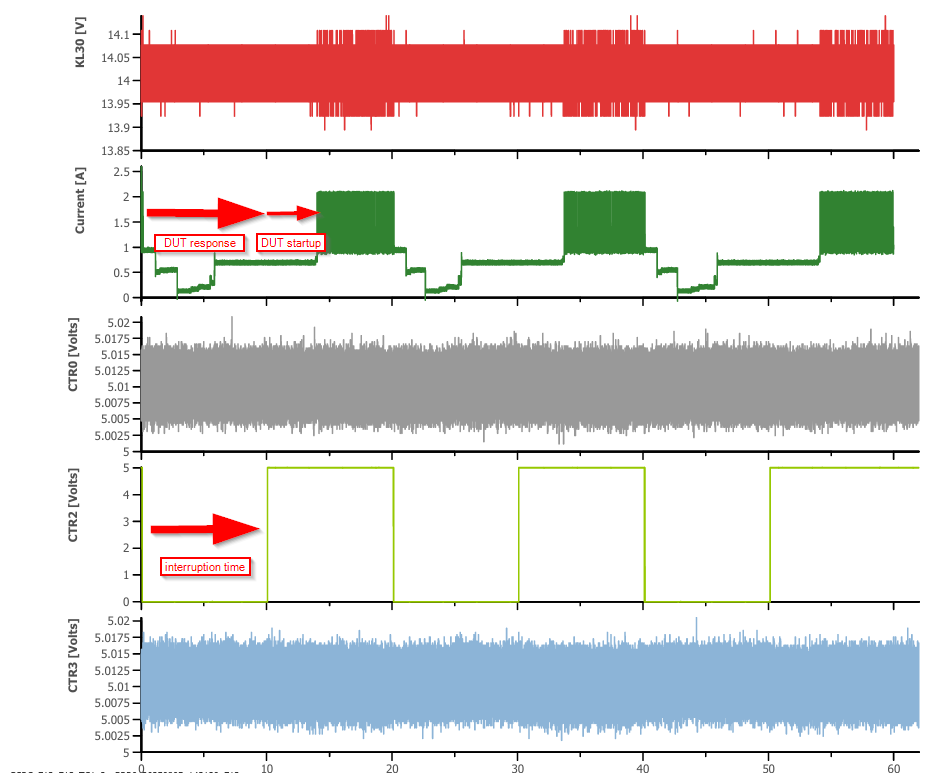
The LV 124 family includes norms for 24V systems — commercial vehicles, trucks, buses, and agricultural machinery. OEMs in this segment include:
MAN (MAN3499) — separate 12V and 24V norm variants. Extensive test catalogues with ground offset, ignition on/off, and blown fuse tests not always found in passenger car norms.
Scania (TB5134) — Scania’s own specification for superimposed voltage ripple, quiescent current, and line interruption tests.
Volvo (Volvo LAH33721792) — Volvo’s specification with 900-series test numbering, covering 12V and 24V systems.
John Deere (JDQ 202) — agricultural machinery OEM with its own electrical testing requirements for 12V and 24V systems, reflecting the harsher operating environments of farming and construction equipment.
12V / 24V systems – All supported in RTStand
48V norm variants — ISO 21780 / VDA 320 / VW 82148
As mild hybrid (MHEV) architectures have become standard across European OEMs, 48V-specific norm variants have emerged alongside the 12V base standards:
LV 148 / 48V norm variants for mild hybrid architectures
ISO 21780 (ISO21780) is the international 48V standard — the 48V equivalent of ISO 16750, defining test types and conditions for components in 48V vehicle electrical systems.
VDA 320 is the cross-OEM 48V testing standard published by the Verband der Automobilindustrie. It defines the electrical test conditions for components operating in 48V vehicle systems.
VW 82148 (VW82148) is the Volkswagen Group’s specific implementation of LV 148 / VDA 320, adding VW-specific parameters for their mild hybrid platforms. The E48-series test designations cover 48V-specific overvoltage, recuperation, superimposed voltages, and short interruption tests.
An ECU operating in a 48V system typically needs to pass both the 12V norm (LV 124 or its OEM variant) and the 48V norm (LV 148 / VDA 320 or its OEM variant).
48V system – Supported in RTStand
Quick comparison — what differs between OEM variants
| Aspect | Typical difference between OEM variants |
|---|---|
| Voltage levels | Each OEM defines their own overvoltage, undervoltage, and operating voltage boundaries — based on their specific alternator and regulator characteristics |
| Ramp rates | The speed at which voltage changes during transient tests differs — some OEMs require faster ramps, meaning the ECU has less time to react |
| Hold times | How long the ECU must survive at a given voltage condition — varies by OEM and by severity class |
| Pass/fail criteria | What counts as “passed” — some OEMs require full functionality during the test, others allow temporary degradation with defined recovery times |
| Mandatory tests | Not all tests are mandatory in every variant — some OEMs make certain test groups optional depending on the ECU’s location in the vehicle |
| Communication requirements | Which communication buses must be monitored, and what constitutes a communication failure, differs by OEM |
| Additional tests | Some OEMs add proprietary tests that do not appear in the base LV 124 or ISO 16750 — these are the hardest to support without a flexible test system |
The practical problem for Tier 1 suppliers
A Tier 1 supplier serving VW, BMW, and Mercedes must test the same ECU against three different norm variants — each with different voltage levels, timing parameters, and pass/fail criteria. Without a system that supports all variants natively, this means three separate test setups, three separate configurations, and three separate reports. RTStand eliminates this by supporting all variants in a single norm library — the engineer selects the norm, and RTStand applies the correct parameters automatically.
RTStand norm library — 47+ norms and growing
RTStand includes a continuously updated norm library with 47+ norms and specifications. The upcoming 2026 SP1 release expands this to 50+. Every OEM variant described in this article is implemented as a ready-to-use test profile — the engineer selects the norm, the variant, and the test group, and RTStand executes it fully automated.
When an OEM releases a new version of their norm, WKS updates the library and delivers the update to all RTStand customers as part of the maintenance contract. No manual rework, no re-configuration — the new parameters are applied automatically.
LV124 * LV148 * VW 80000 (2013–2022) * VW 82148 * BMW GS95024-2-1 (2010–2026) * BMW NCAR 2023 * BMW BTTests 2023 * Audi LAH 4N0419091 (2021) * Audi LAH 895941 (2023) * Audi LAH 89A947B (2024) * MBN 10567 (2018, 2024) * MBN LV124 (2013) * ISO 16750-12V (2012, 2023) * ISO 16750-24V (2012, 2023) * ISO 21780 (2020) * GMW 3172 (2018) * MAN 12V 3499 (2017–2020) * MAN 24V 3499 (2017–2020) * Scania TB5134 (2023) * Hyundai HKMC ES95400 * FCACS00054 (2018) * PSA B217110 (2019) * QJGAC 152028 (2022) * ChangAn VS0034L10002 * Renault RNDSC00517 * Lucid EEDRCS (2023) * Zoox ESPS (2024) * McLaren MSL03040004 * Volvo LAH33721792 * JLR EMCCS (2013) * KTM T201T202 (2023) * QLiA 3800001 etc.
Which norm variant does your customer require?
Tell us the OEM and the ECU. We will confirm which norm variant applies and show you how RTStand handles it — including a sample test run and report.
RTStand LV124 / LV148
Built by WKS Informatik GmbH · Ravensburg, Germany – Imprint